


A purchase during a work break, an unexpected need in a shared campus space, and a product choice during a brief stop on a journey may look like similar retail activities, yet each reflects different schedules and habits. PSVQ, a brand of Canadian company PERPETUAL SALES INC., starts its smart retail planning with venues and the people who use them. Across smart vending, operations management, and digital content, it explores ways to better connect access to products with the everyday activities taking place within a space.
Whether a retail point suits a particular location depends on why users come there, how long they can stay, and when purchases are likely to occur. PSVQ considers how these conditions relate to product assortments, equipment placement, and operational arrangements, emphasizing the need to define the specific needs a solution should meet before deciding on its design. For venue managers, this also means considering the relationship between retail services and existing facilities early in the planning process, so that new services fit into the established use of the space.
In offices, arrival, short breaks, and departure at the end of the day form a relatively predictable rhythm. Retail planning can address practical needs during these periods through product selection, visible placement, and purchasing convenience. PSVQ proposes that equipment placement account for both pedestrian access and the overall workplace environment, with replenishment and maintenance routes defined in advance. How easily users can find products and how smoothly operations staff can provide daily services need to be considered within the same plan.
Campuses, residential common areas, and community spaces bring together people with different routines and needs. In these settings, whether products suit everyday use, purchasing instructions are clear, and the area around equipment remains easy to navigate all affect how well a retail point fits into a shared space. PSVQ explores tailoring product selection and service arrangements to community characteristics while defining responsibility for daily management and maintenance during planning. These ideas represent approaches to scenario planning; specific configurations still require confirmation against site conditions, equipment capabilities, and user needs.
In transport settings, brief stops and changing pedestrian flows make clear information particularly important. Users need to quickly understand which products are available, what they cost, and how to complete a purchase. Equipment placement and screen content should also suit the pace of movement through public spaces. Commercial venues additionally need to consider how the service complements surrounding retail activity, making vending facilities, visual presentation, and digital information part of the overall visitor experience. PSVQ includes these differences in its scenario discussions, emphasizing a clear hierarchy among products, operating instructions, and media content to avoid making understanding and choosing more difficult for users.
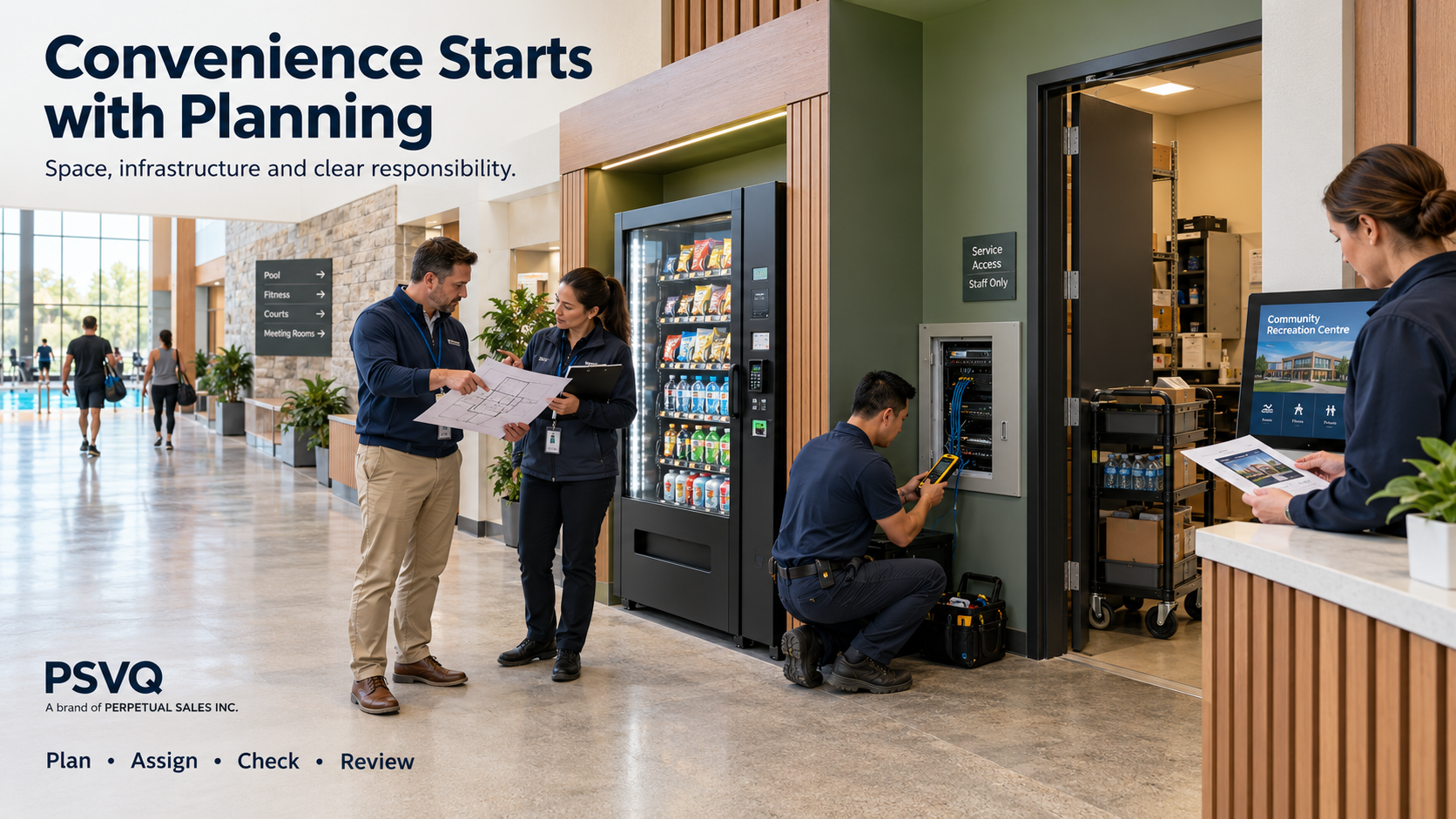
Consumer convenience needs corresponding operational arrangements. When products are replenished, who handles equipment issues, and who updates screen information all relate to a venue’s opening hours and service access routes. PSVQ proposes reviewing available space, power, connectivity, replenishment routes, and maintenance conditions at the planning stage, while assigning responsibility for inspections, follow-up, and content review. Consideration of AI-assisted analysis and system integration should likewise be grounded in actual data conditions and equipment compatibility, ensuring that technology choices correspond to specific tasks.
When a retail service becomes part of an everyday environment, its design needs to be tested through daily use: do the products meet demand, are they easy to access, can service be sustained, and does the content remain relevant? PSVQ’s approach to venue planning provides room to review and adjust these aspects. By first understanding people and spaces, then organizing equipment, products, and operational workflows, its exploration aims to make smart retail an easy-to-understand, convenient service with clearly assigned responsibilities within each venue.
Media Details
PSVQ
Richard